How to Motivate Yourself to Study Without Burnout

How to Motivate Yourself to Study Without Burnout
Simple ways to stay focused and productive when studying feels impossible.
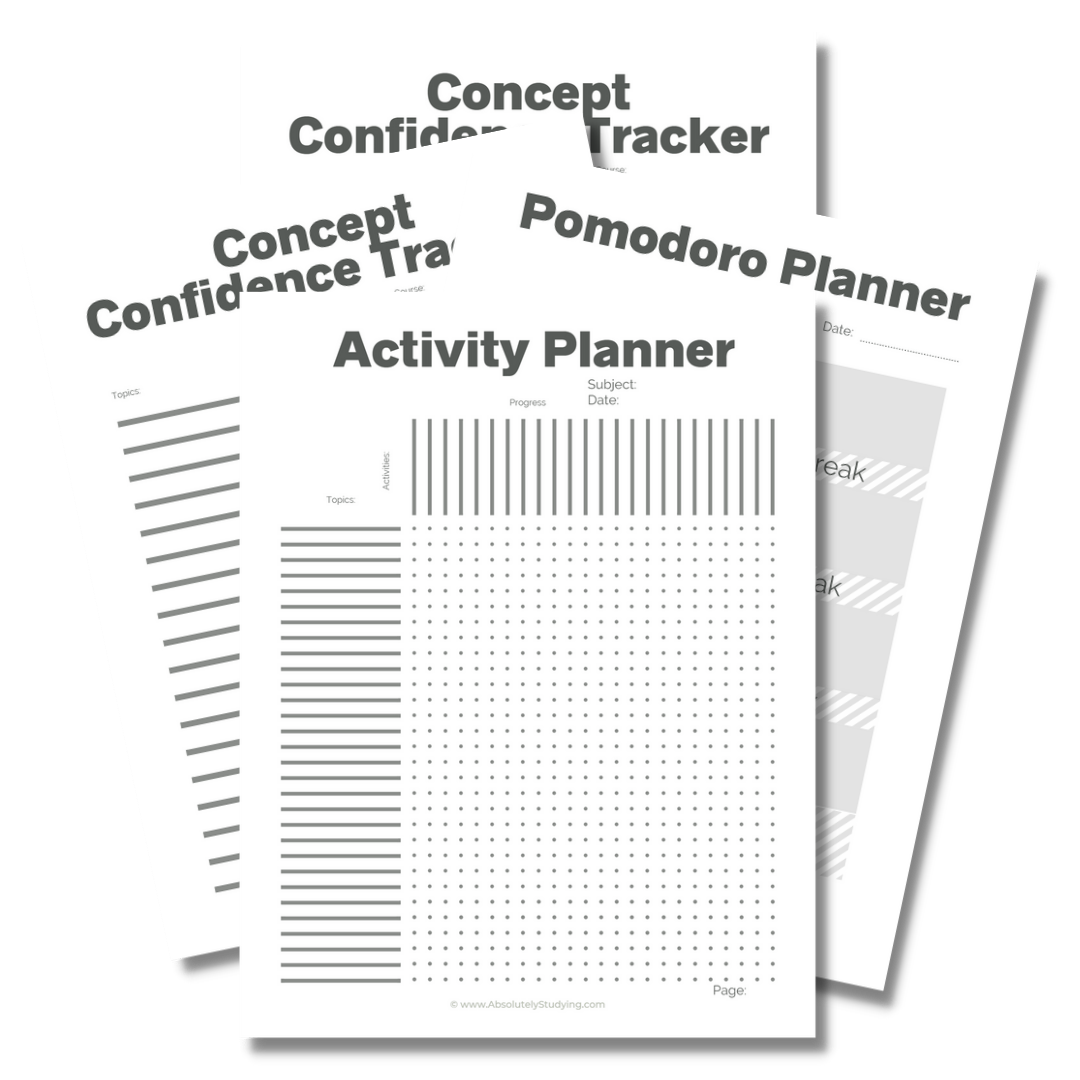
Everything you need for the semester you want!
This bundle includes:
The Syllabus Study Planner
The Pomodoro Planner
A Confidence Tracker
A Q&A planner
The “Get Organized Checklist”
and more!
This workbook is full of super useful resources that can be applied to every aspect of your day.
* Disclaimer * Some of the posted links are affiliate programs. By clicking these links, I may receive monetary compensation. This will not alter the price or change the buyer's experience.
If you’ve been struggling to figure out how to motivate yourself to study lately, you are definitely not alone.
Sometimes the hardest part of studying isn’t understanding the material. It’s simply finding the energy and motivation to start in the first place. When you’re tired, overwhelmed, stressed, or mentally burned out, even opening your laptop or looking at your notes can feel exhausting.
A lot of students think they need to suddenly become perfectly disciplined or highly motivated overnight, but real study motivation usually doesn’t work that way. Most of the time, motivation is built through small habits, realistic routines, and simple strategies that make studying feel less overwhelming and more manageable.
In this article, I’m going to share realistic study motivation tips that can help you get started even when you feel completely unmotivated. These strategies are designed to help you stay productive, focused, and consistent without pushing yourself toward burnout.
How to Motivate Yourself to Study
There was a point in university where I genuinely thought something was wrong with me because I could never seem to “just sit down and study” the way other students talked about it online. I would watch productivity videos, buy new planners, reorganize my desk, and promise myself that this was finally going to be the week I became one of those perfectly disciplined students who studied for hours every day without struggling. But instead, I would sit down, stare at my notes, immediately feel overwhelmed, and somehow end up doing literally anything else instead.
What made it even harder was the guilt that came with it. Every time I procrastinated, I felt lazy. Every time I lost focus, I convinced myself I just wasn’t motivated enough or wasn’t “good” at studying. But over time, I started realizing that a lot of students secretly struggle with motivation far more than they admit. Most people are dealing with exhaustion, stress, work, family responsibilities, mental burnout, or simply trying to balance too many things at once.
I also realized that motivation is often treated like it magically appears before you start studying, when in reality, that usually isn’t how it works. Most of the time, motivation shows up after you begin. The hardest part is often just opening the textbook, starting the first question, or reading the first page of notes when your brain is fighting you the entire way. Once I understood that, studying started to feel less like waiting for inspiration and more like learning how to work with my own habits and energy levels.
Some days, studying still feels difficult for me. There are still moments when I feel overwhelmed by deadlines or mentally exhausted before I even begin. But I’ve learned that building motivation isn’t about becoming a perfect student who never struggles. Learning how to motivate yourself to study often comes down to creating small routines, setting realistic expectations, and establishing systems that help you keep going even on days when motivation feels completely gone.
If you’ve been struggling to motivate yourself to study lately, you are definitely not alone. The good news is that motivation is not something you either “have” or “don’t have.” It’s something you can slowly build through small habits, mindset shifts, and study strategies that make the process feel less overwhelming and more manageable.
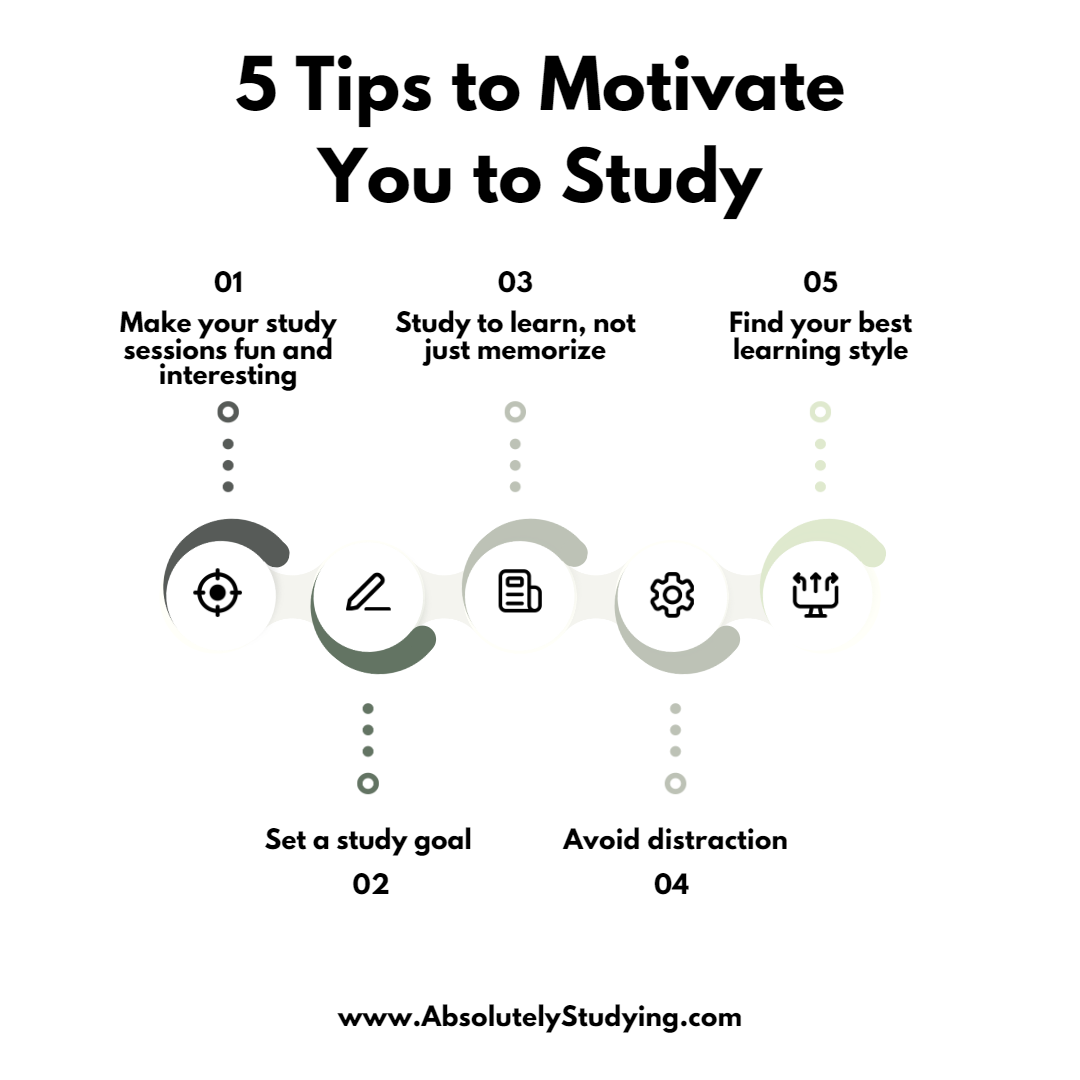
1. Make your study sessions fun and interesting
You enjoy playing video games or watching Netflix because these are fun and interesting. These require no motivation, and you love doing them all the time. Hence, you need to make your study time equally fun and interesting.
But how can you do this?

Well, here are a couple of ways that work well to make your study time more enjoyable:
Listening to music:
Solving math problems while listening to music is a great combination. Background music not only makes your study time stimulating but also improves your concentration. It’s been proven that listening to classical music or music without lyrics boosts one’s concentration. So, try it now while studying.
Apply what you learn:
Just studying theory can be boring unless you apply it. Whether you do a small science experiment on what you learn in your Chemistry class or calculate the area of your study room after learning Math, it helps you to apply the knowledge you just took in.
Use Flashcards and Mindmaps:
Flashcards and mind maps also work great to make your study fun and interesting. Flashcards help you to memorize any concept or formula easily. In contrast, Mind mapping allows you to identify relationships among topics and explore subjects more broadly.
2. Set a study goal
We often lack motivation to study because we don’t have a goal or target for our study session. Do you set a timer? Or plan out your routine ahead of time? This can also contribute to a lack of motivation to get started.
You might not believe it, but when you set goals, you are more likely to achieve them. So, choose your study goals! Targets like listing important topics or how many pages you can read in half an hour. Jotting these things down on paper is the first and best step toward building motivation and preparing yourself to study.
The key here is to make tiny study goals. Don’t choose targets like studying for 6 hours at a time. If you want to study longer, you can add more goals once you have achieved your tiny ones and studied effectively.
3. Study to learn, not just memorize
A quote by Natalie Portman says, “I don’t love studying. I hate studying. I like learning. Learning is beautiful.”
I agree that studying can’t be everyone’s cup of tea, but learning can be. Learning is always fun and exciting.
Studying means reading and memorizing, while learning means gaining knowledge and upskilling yourself.
If you have ever focused in a class learning a novel concept that caught your attention, then you must have learned something worthwhile that day. Learning expands your world and introduces you to new insights. It does not have to be formal education, but it will allow you to see things from a new angle. Sometimes, understanding how to motivate yourself to study starts with reconnecting to the curiosity and excitement that made learning feel meaningful in the first place.
The best part of learning is that you don’t even have to memorize anything when you are focused enough to learn. You just need to revisit the material from time to time, so you won’t forget anything.
Hence, if you don’t feel like studying, opt for learning because learning is always exciting, and gaining knowledge is always rewarding.
4. Stay away from distractions
Now, if you decide to learn and study, make sure you eliminate distractions first. Distractions could be anything that grabs your attention while studying. It could be your phone, social media, television, or annoying roommate.

Make your study area distraction-free, and use a study table and chair instead of studying in bed. Studying in bed can make you feel sleepy and lazy, whereas using a study table and chair helps you maintain an upright posture and focus better on your studies.
If you can’t set up a distraction-free study area, as I said above, try a library where you get a good study environment.
5. Use Study Techniques
Using study techniques boosts your motivation to study, and you learn more effectively. Moreover, some techniques improve your subject clarity and help you study. If you are trying to learn how to motivate yourself to study, finding study methods that keep you engaged can make a huge difference in your focus and consistency.
Here are some of the best study techniques to try while studying:
Feynman Technique:
This technique helps you to learn a concept quickly and effectively. It is a four-step process:
Pick a topic.
Explain it to someone with an easy-to-understand description of that topic.
Identify your knowledge gap that you can’t explain clearly.
Organize and simplify the concept.
Spaced Practice:
This technique helps you preserve the information you learn for a longer time. According to this technique, you review and revisit the material in spaced intervals over time:
Day 1: Learn the material in class
Day 2: Revisit and review
Day 3: Revisit and review
After one week: Revisit and review
After two weeks: Revisit and review
SQ3R Technique:
This reading comprehension study technique gives you the right direction to read a chapter and get the most out of it. SQ3R is a 5-step process that combines Survey, Question, Read, Recite, and Review.
To begin with, take a survey of the chapter. Next, create questions for each topic, such as what the topic is about and how it relates to the real world.
Once you have questions, read each section and try to find the answer. If you can’t find answers, then try to recall them.
The final step is to review the chapter to ensure that you understand it, quiz yourself on the questions you created, and reread any unclear parts.
Now, it leads to my 6th tip to motivate you to study...
6. Find your best learning style
Some days you may not feel like studying your textbooks. When this happens, try to visualize what you need to learn. Watching video lectures around that topic is an excellent place to start.
There are four learning styles, in case you’re unfamiliar with them. These are Visual, Auditory, Reading & Writing, and Kinesthetic.
A visual learner learns more easily by watching visuals such as images, videos, and graphics. In contrast, a kinesthetic learner learns by actually doing practical work.
Now you need to figure out which learning style motivates you to study and enables you to learn effectively. It is possible to have more than one learning style. In this case, find the activities that play to these strengths and that you enjoy. Learning how to motivate yourself to study often becomes much easier when your study methods actually match the way you learn best.





7. Reward yourself every time
To stay motivated while studying, you need to appreciate your efforts and reward yourself. Whenever you solve a difficult math question or finish homework for one subject, it’s always good to reward yourself.
Think about when you score an A on your test paper and how your parents reward you with your favorite video games or a new cycle. These rewards are intended to motivate you to do more next time.
Likewise, you should also reward yourself from time to time. Now, here, a reward could be anything. It could be enjoying an ice cream, hanging out for half an hour, watching your favorite Netflix show, or anything that gives you the kick to keep going.
If you’re looking for motivation to study, first find the reward that will push you. For example, you may use your phone for 30 minutes as a reward for studying uninterrupted for 1 hour.
Isn’t it a great way to motivate yourself to get to work? However, you must keep your promise.
8. Always remember your ambition
Do you have any ambitions or dreams? You must have specific goals in life to keep you working toward your future. These can start with targets like passing your exam with good marks or getting into your dream college. Buying a luxurious car and working towards your dream career will also help you succeed.
Your goals can only be achieved with hard work and education. These are the things you are actually working towards when you study. Getting lazy won’t help you to achieve success. So, what are you waiting for?
If you’re not feeling like studying now, close your eyes and visualize your dreams for a few minutes. You’ll surely be motivated to study if you’re serious about your goal and plans.
Now It’s Your Turn:
In this article, I have given you 8 tips to motivate yourself to study. I hope you have enjoyed the article too.
Now I’d like to hear from you:
Which tips from this article motivate you most to study? Are you going to study now?
Let me know in the comments. Or, if you have any queries, mention them as well. I’d love to reply to you.

My Short Bio:
Hey there! My name is Saurabh Barnwal, founder of Studelp. I love sharing my knowledge and experience through writing. On our blog, I keep sharing study tips and guides, career advice, and college essentials for students.
I would like to be transparent so that there are no misunderstandings. As an affiliate, I may earn a small commission from any products linked in this post. This is not a sponsored post, and I was not asked to recommend these products. These are products that I genuinely love and want to share with my audience.