How to Help Someone Study for a Test Effectively

How to Help Someone Study for a Test Effectively
How Study Partners Can Improve Learning and Retention
Everything you need for the semester you want!
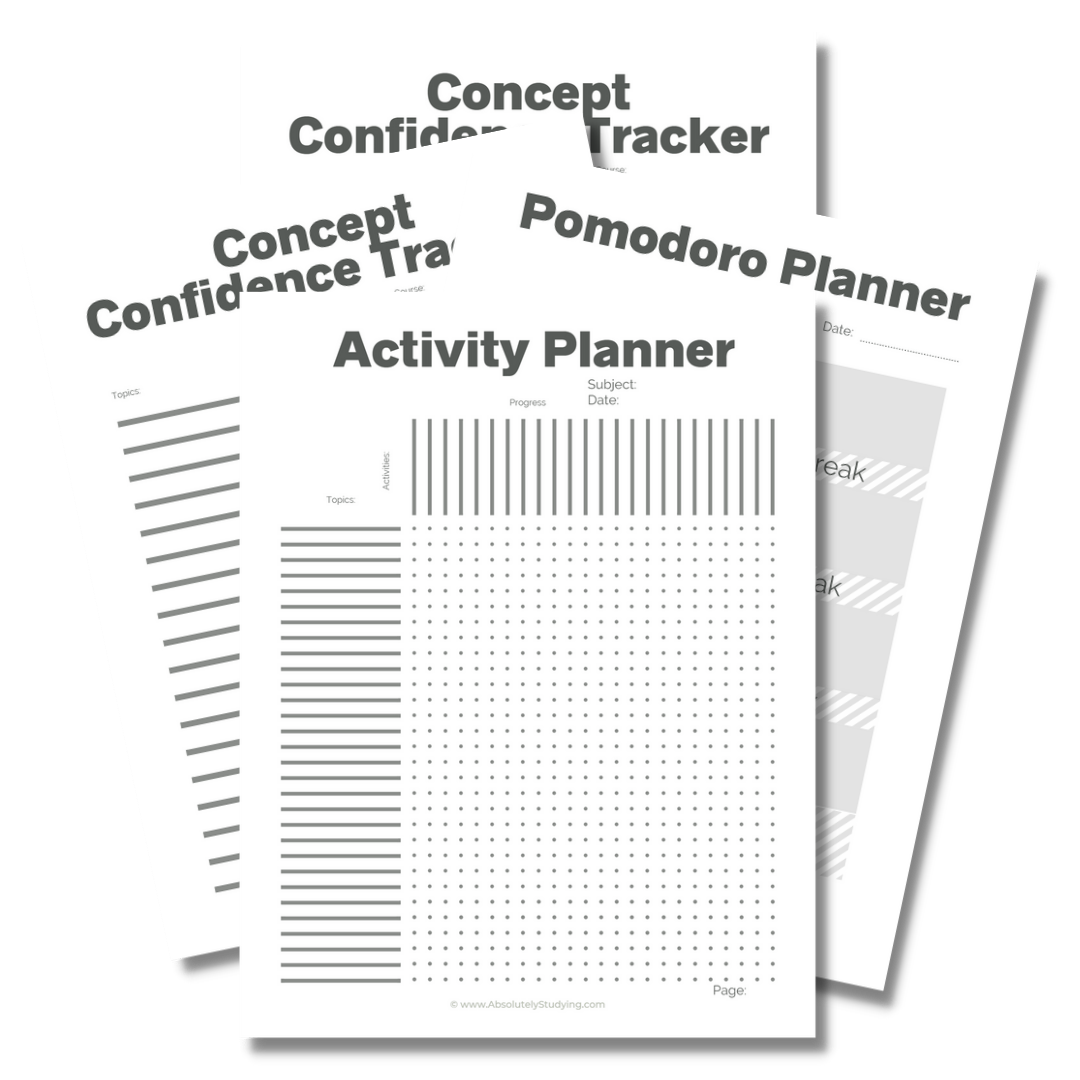
This bundle includes:
The Syllabus Study Planner
The Pomodoro Planner
A Confidence Tracker
A Q&A planner
The “Get Organized Checklist”
and more!
This workbook is full of super useful resources that can be applied to every aspect of your day.
* Disclaimer * Some of the posted links are affiliate programs. By clicking these links, I may receive monetary compensation. This will not alter the price or change the buyer's experience.
If you've ever wondered how to help someone study for a test, you're not alone. Sometimes, helping bestie prepare for a midterm, quizzing your spouse before an important exam, or supporting your child through a challenging course can be difficult. It’s hard to know what actually helps and what simply “feels” productive.
For years, I thought helping someone study meant reviewing notes together, asking if they understood the material, or helping them reread chapters from their textbook. While those strategies can have their place, I eventually learned that some study methods are far more effective than others. In fact, one of the biggest challenges students face is believing they know the material when they really don't.
The good news is that you don't need to be a teacher, tutor, or subject matter expert to make a meaningful difference. Sometimes, the most effective thing you can do is ask the right questions and create opportunities for the student to actively retrieve information from memory.
In this guide, we'll explore how to help someone study for a test using evidence-based study strategies, common mistakes to avoid, and simple techniques to help students feel more confident and prepared on exam day.
One of the best study strategies is to write practice exams. They are a great way to test your knowledge and identify which material you might need to spend more time on. They are also great for building confidence leading up to test time.
Creating practice quizzes is also an effective study skill. This has you actively scouring the material from multiple perspectives and identifying questions. When making these exams, you review your notes critically, searching for new ways to phrase and create problems.
If you are setting out to help someone study, you can make this strategy even better by testing them. This way, they cannot peek at the answers, and you can really drill down into how much information they know and can explain.
What are the best strategies to study for a test?
The best activities for studying for a test are active recall strategies. Active recall involves using prompts to trigger the recollection of something you’ve learned. These prompts or memory cues can be anything from questions and terminology to keywords and diagrams.
With active recall, you are testing the strength of your mental associations. Can you withdraw the information that you studied? Will you be able to come up with cogent answers during your exam? Can you properly communicate your thoughts to receive full marks? This is what you are testing.

Some examples of active recall exercises that you can try with a partner during your study sessions are:
Flashcards
Brain dumps
Teaching concepts and asking questions
Quizzing each other
or marking practice exams
Practice tests are the best study strategy for preparing for your exam because it most closely replicates the conditions. When you sit down to do one, clear your desk, close your books, and try to make them about the same length as your final. Repeating this over and over will not only strengthen the recall of your memory cues but will also make sure you build the stamina and confidence to face your tests.
If you're wondering how to help someone study for a test, creating practice quizzes and asking them questions can be one of the most effective things you can do. Instead of simply asking whether they understand a concept, challenge them to explain it in their own words, define key terms, or walk you through a process step by step. This forces them to retrieve information from memory rather than recognize it on a page, making it much easier to identify knowledge gaps before exam day.
How can confirmation bias impact your test scores?
Despite the many benefits of writing practice exams, confirmation bias is one major downside.
Confirmation bias simply means we tend to see ourselves as correct despite credible evidence to the contrary. It’s when we look at the answer and interpret it in a way that reinforces our existing beliefs. This simply means we are more likely to believe data that supports our ideas. This is an unconscious bias. It’s not something you do on purpose or that you’re even aware of.
So, how does this impact your study habits, specifically practice tests? It means that unless your answer is totally wrong, you are more likely to look at it and believe it’s correct. This can be problematic when you don’t realize you don’t fully understand a concept.
Often, when we answer a question and may have been vague or slightly off, we still consider ourselves correct. We just tell ourselves, “That’s what I meant.” But did you really? The bias ensures that you will never fully know, even though you honestly believe you did.
Confirmation bias can lead you to believe that nuanced answers are correct when they are not. It’s crucial that these gaps in your knowledge are found and filled in before you write your actual exam. To get full marks on every question, you have to be able to give clear, concise, cogent answers. You can’t do that without fully understanding the concept.
So, how can we negate the effects of confirmation bias?
How to Help Someone Study for a Test Effectively
The best way to have an unbiased view of your answers is to have someone else test you or correct your practice exams. Having someone test you will help counteract confirmation bias by prompting you to critically analyze your answers.
Regardless of whether they quiz you with flashcards or look over your practice tests, they can push you to delve deeper when giving a vague answer or shut you down if you are on the wrong path. This second opinion can hold you accountable for the solutions you provide. They can also help to more clearly define areas that you are struggling with or do not quite grasp.
Partnering with friends for practice quizzes or flashcards will stop you from looking up answers.
Having someone else test you will discourage you from taking that sneak peek at your notes or textbook as you review the questions. This will give a more accurate analysis of the information you can work with without prompts. We often have a blind spot when it comes to our own abilities. Some of us are extremely hard on ourselves, expecting nothing less than perfection. Others might have no belief in themselves and just assume they will fail.
This clear and unbiased analysis of what you actually know and do not know is beneficial. It allows you to assess more clearly what you really need to focus your study efforts on. It can also soothe a critical view and reassure you that your knowledge is adequate.

We often spend significant time focusing on concepts that we find especially difficult. Sometimes, if we are just doing a quick study session, we might review something that we found fairly easy. Unfortunately, a whole spectrum of content between these two extremes is easily overlooked. Having a second person there to test you can help you calculate the fluency of your recall on this spectrum, so you can focus on the content you are mediocre with.
Having a friend quiz you is an excellent way to check in throughout the semester.
You must regularly check that you understand the concepts and can apply them in other areas of study. This can also give you a new perspective on critical material.
Your classmates have different views on life and the lecture material. They may consider some things important that you might not have picked up on. You can tap into this insight by trading practice tests or partnering on flash cards.
This new way of seeing the coursework could help fill in any gaps in your understanding. This is helpful on tests when you need to communicate your thoughts effectively.
Access to more sample questions will help you prepare for anything unexpected on the test.
Repeated practice quizzes help you with active recall and subject matter comfort. If you can incorporate a wide array of questions, that will only increase your advantage. Trading practice quizzes or flashcards will instantly give you access to a whole database of questions without the trouble of creating them yourself.
Your friends will also have different insights into how questions could be posed or phrased for matters you may not have come up with yourself. This will have you answering problems about the same concepts in various ways.
Switching up how you ask and answer questions is a great way to test your mental associations with a concept. These are the pathways that you rely on for recall during test time. Exercising these mental links and creating memory cues is crucial to a good mark.
Having someone put you in the hot seat can help with exam anxiety.
Much test anxiety stems from not knowing what will be on the exam. This is not unlike sitting with friends for a practice quiz. You have no idea what they will ask you or how.
If you share several study sessions with friends doing these practice tests, the novelty of the unknown will begin to wear off. You will become so rehearsed in taking these quizzes that the fear of the test will start to subside.
That’s not to say that it will necessarily disappear completely. However, not knowing what is on it will become much more tolerable.
If you're looking for how to help someone study for a test, practice quizzes can also provide valuable emotional support. Encouraging someone to answer questions in a low-pressure environment helps them build confidence before exam day arrives. The more opportunities they have to practice recalling information and thinking through questions out loud, the more prepared and capable they will feel when it is time to sit down and write the actual test.
Incorporating others into your study session can be a nice break from lonely study activities.
A lot of the time, we hate our study sessions because they are lonely. Incorporating others into your study activities and spending your time productively is hard. There are usually so many interruptions and tangents. They often have different study strategies and learning styles. Or, you just end up catching up and not even opening your books.
Pulling out flashcards or practice quizzes can help with this. Chatting about the questions, especially the answers, can be a learning opportunity for both of you. Teaching each other concepts and discussing the details is incredibly helpful for learning to communicate your thoughts and ideas.

Study Skills Digital Course
Learn how to create a stress-free, comprehensive study strategy!
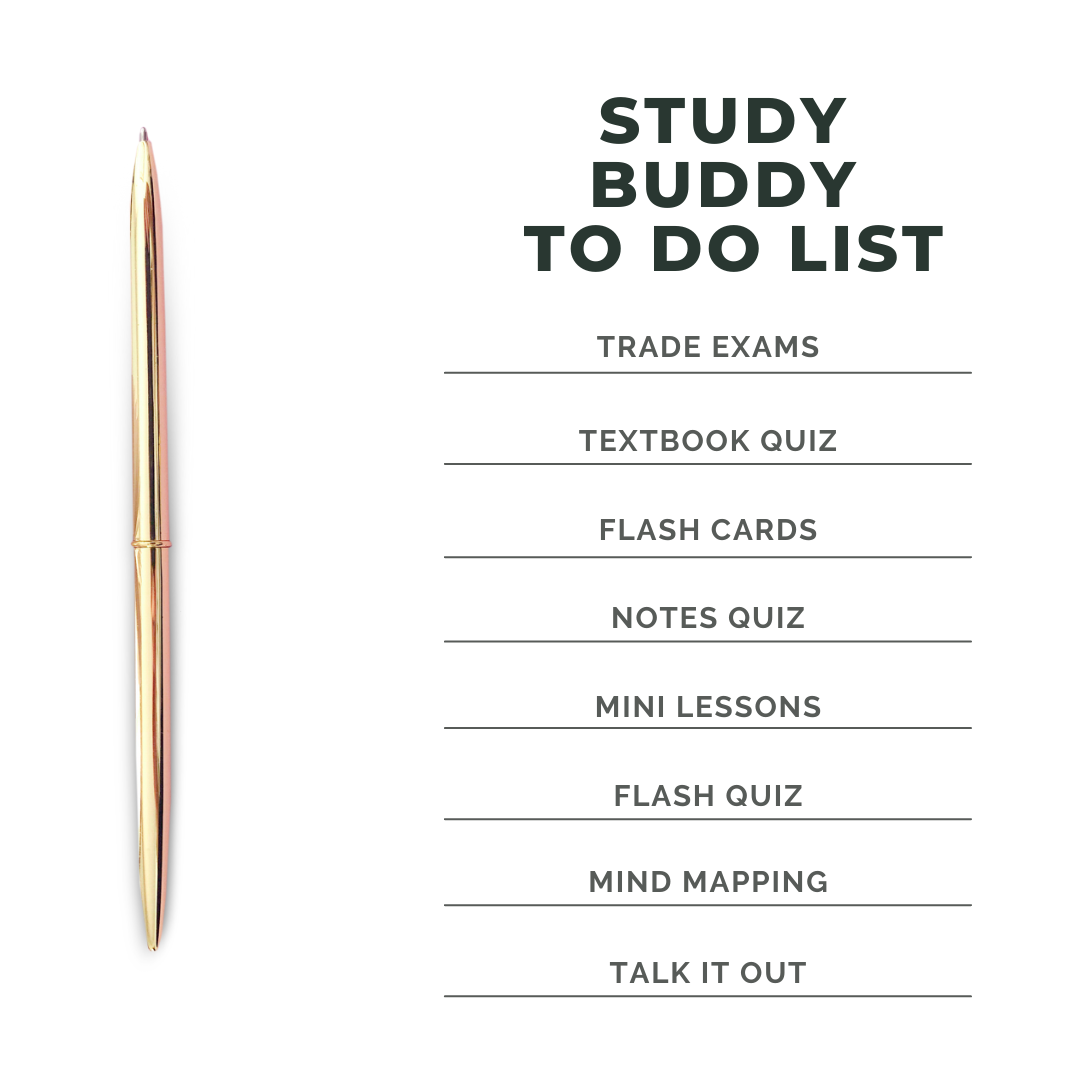
There are several ways that you can have someone test you:
You can trade exams with another student, then mark and correct each other’s answers. Often, more is learned from incorrect answers than from the correct ones. Explaining why an answer is wrong and teaching the correct answer to another person are both excellent skill-builders and great for reinforcing knowledge.
Have someone ask you questions out of your textbook or notes. This is especially useful if the person has little knowledge of the material. If you can explain it to them in plain language and give them a strong understanding of what you are describing, then you know the material well. If you have difficulty explaining a concept to them, you likely still struggle with it. If you can teach the material to a kindergartner and have them walk away with a solid understanding, you know you are likely ready for test time.
Have a classmate pose questions from their notes. This is fantastic for broadening your perspective and fluency with the material, as it will show different ways the questions could appear on the exam and various assessments of what content might be important.
Have someone test you with flashcards. Whether they are familiar with the material or not, this is a great way to do a quick speed round to test their understanding of the concepts.

Having someone else test you can uphold the merits of an answer, whether it is right or wrong. Often, the more detailed and fleshed out a solution you can provide, the more marks you will receive at test time. Perhaps there are some factors you are overlooking that could make the answer more accurate.
When you're learning how to help someone study for a test, one of the most valuable things you can do is ask them to explain their reasoning. A second person can often spot gaps in understanding, challenge assumptions, and encourage deeper thinking. By talking through how they arrived at an answer, students can refine their thought process, correct misunderstandings, and strengthen their overall understanding of the material.
They can also help to alleviate some test anxiety. This puts you in the hot seat, not unlike exam day, where you must reveal all your knowledge to another person to critique. This can cause anxiety in itself, and hashing out and becoming confident with the information you possess now can relieve the anxiety at test time.
Don’t forget to pick up your copy of my free Study Planner. It has a template to easily create flashcard questions or practice quizzes. It is also packed with other activities, so you can create a study strategy that works for you. Download it here.

I would like to be transparent so that there are no misunderstandings. As an affiliate, I may earn a small commission from any products linked in this post. This is not a sponsored post, and I was not asked to recommend these products. These are products that I genuinely love and wanted to share with my audience.