Smart Strategies for Labs Every Student Should Know

Smart Strategies for Labs Every Student Should Know
How Practical Experience Elevates Your Academic Performance
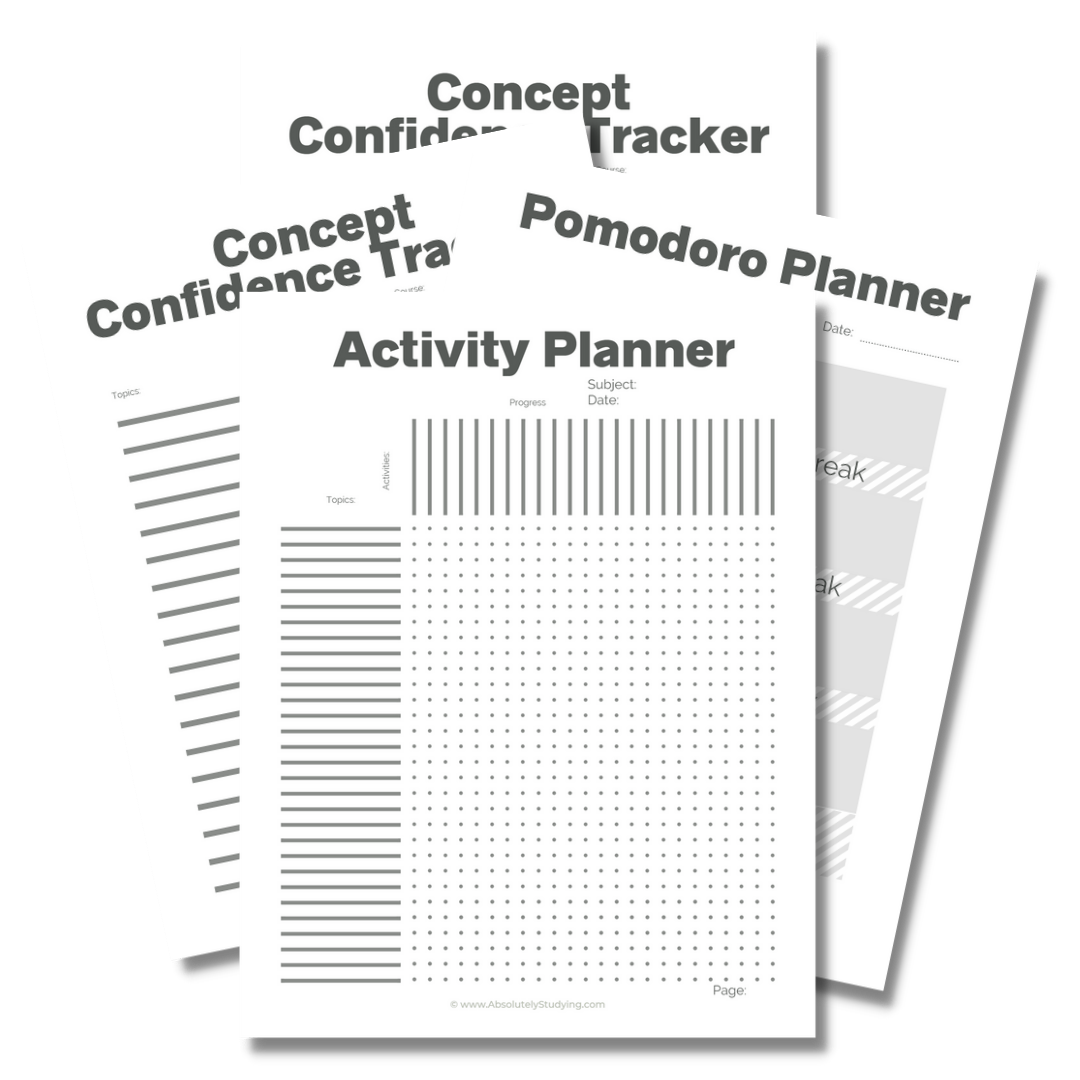
Everything you need for the semester you want!
This bundle includes:
The Syllabus Study Planner
The Pomodoro Planner
A Confidence Tracker
A Q&A planner
The “Get Organized Checklist”
and more!
This workbook is full of super useful resources that can be applied to every aspect of your day.
* Disclaimer * Some of the posted links are affiliate programs. By clicking these links, I may receive monetary compensation. This will not alter the price or change the buyer's experience.
As I sat in the back of the lecture hall, my mind raced. It was one of those days when the sheer weight of my courses felt unbearable. Around me, classmates quietly compared their lab schedules, each one sounding more chaotic than the last. With midterms approaching and the pressure to excel building, I knew I needed better strategies for labs, but part of me still wondered whether attending every session was necessary. I glanced down at the scribbled notes from my last lecture and thought, Do I really need to attend every lab? I mean, they don’t even take attendance?
Yet, deep down, I knew the truth: skipping those labs wouldn’t just mean missing a few hours of my week; it would mean passing up the opportunity to transform my theoretical knowledge into real-world skills. I remembered how those hands-on experiences had shaped my understanding, not just of the material but of my passion for science itself. I realized that every lab session, every tutorial, was a chance to deepen my understanding, to hone my skills, and, ultimately, to carve my path toward success in this demanding field.
But I wasn’t alone in this struggle. Many students face the same internal battle, questioning whether those extra hours in a lab or tutorial are genuinely worthwhile. As you read on, I’ll share practical strategies for labs that can help you approach these important parts of your education with greater confidence. Together, we’ll explore how to do more than simply survive your labs and tutorials. We’ll turn what may feel like an overwhelming burden into a valuable opportunity to learn, grow, and succeed.
7 Smart Strategies for Labs Every Student Should Know
Science majors will likely have the loudest voices here. Having to schedule a full day of lectures with all the labs accompanying them is no easy task. Not to mention that labs usually come with their own workloads. It is often like taking 8 or even 10 classes rather than 4 or 5.
I can say that deep into the midterm season, I have considered switching to another faculty more than once.

Sometimes, it just does not feel worth it. So much stress, so much extra work, and for what? Most of what I need to know is already covered in the lecture portion; do I really need to attend these extra blocks? I mean, they don’t even take attendance. Will they even know?
The answer to these questions is a resounding: yes!
You will definitely benefit from attending these blocks. Not only will it refine your knowledge and skill, but the practical experience that you will get is invaluable.
The reason we want to attend every single lab and tutorial is the same reason we want to attend every lecture. There are so many nuances in the way a professor presents a lecture in class. Their inflection might tell you something about the context. There will be a repetition of certain points. They might come back to and stress a certain theme, word, or phrase as they cover several different concepts.
Although many professors will post their lecture slides, either before or after class, these are just a few of the details that you won’t be able to pick up from them.
Although you may be able to see what will be covered in class, one of the most useful strategies for labs is paying attention to the small details your professor shares during each session. These details become invaluable when you’re sorting through the massive pile of notes you’ve accumulated over the semester. Context is often just as important as the material itself, and sometimes you can only gain that context by listening to your professor during class.
Because of this:
Show up
What is covered in your Labs or tutorials is much more likely to be relevant during test time. Whether you have a separate exam for the labs and the lectures or, if you have just one single exam for the entire class. In general, these extra blocks are intended to really reinforce information or techniques that will be essential, not only to pass this class, but also any classes this might be a prerequisite for.
Despite their often “free form,” they are vital to excelling in this field.
Be open to learning
Although attending is a crucial first step, not only do you have to show up, but you must be open to learning. Sometimes when you have a packed schedule, Lab time can turn into a social event. Because they are often much less structured than a class, this is much easier to happen. Come in focused and ready to learn, stay on topic, and dive into the work as deeply and as detailed as you are able to.
Come prepared
Labs and tutorials will often come with their own set of assignments separate from those discussed during your lecture. It is important to read through and understand all the steps involved.
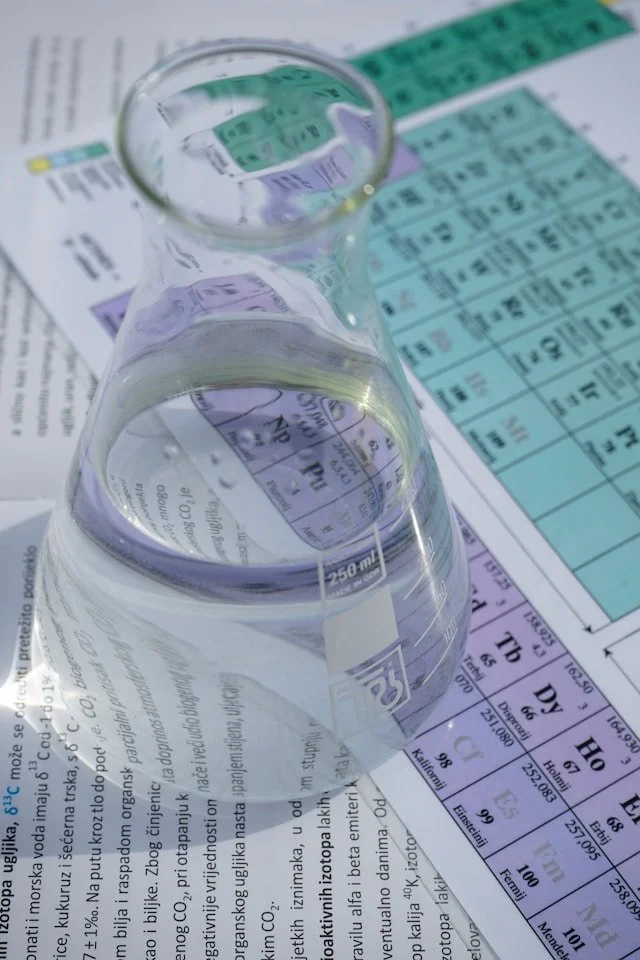
For science experiments, this might mean that you need to read through and familiarize yourself with the procedure that you will be attempting.
When you are reading through, make sure to label and even color code any diagrams that might have been given to you.
Elaborate on any definitions, not only if you don't know them but even if you do. Use this opportunity to test yourself to be certain that you know both the context and content of what you've learned in your lectures.
Elaborate on steps that might be vague or too brief. This gives you the opportunity to make sure that you know what to do next in your own words and also proves that you know this procedure.
For language tutorials
Read through and complete the assignment before class. This allows you the maximum amount of time to focus on pronunciation and fluency.
Do this even if you believe the assignment will be easy. Even easy assignments have the potential to contain difficult or sticky questions. Completing the assignment before the lab allows you to really think those through and ask for help from the professor or TA on specific problems or phrases.
Coming into the tutorial with your assignment completed will give you a heads up on exactly what will be done in that class; this can reduce any anxiety that you might experience during the recording process.
Usually, the most important thing for language classes is that you are showing some degree of improvement between your first and final recordings. Use this time wisely to really demonstrate how you have grown over the semester in terms of fluency and the complexity of your sentences. Using your time to prepare will let you tweak the phrasing of your sentences to get the best results.
For math-based tutorial classes and labs, complete all questions and readings for your assignment.
In math, acquiring confidence with the equations is vital for test time. The only way to develop fluency is by brute repetition.
Coming up with the correct answer is not enough for these types of problems. Being able to understand the steps and the work to get the right answer is often worth more marks than the answer itself.
If there is something that you repeatedly struggle with, having multiple examples of the type of issue that you struggle with will be helpful to present to the professor or TA that is teaching the class. Tutorial time is when this help is usually most readily available. Also, having other students ask questions about a problem you have been struggling with may give you added insight on working out the answer.
Make full use of Tutorial time
The content of labs and tutorials is going to be, by and large, practical content or content that is more difficult to understand by description alone.
These topics are best learned through practice, repetition, and hands-on experience. Many of these concepts can be difficult to grasp in a lecture hall filled with 200 students, which is why one of the most effective strategies for labs is to use as much class time as possible to engage with the material. When completing experiments, don’t simply rush through each procedure to finish. Slow down, pay attention, and allow yourself to really experience the process:
Stop throughout and take detailed notes not only about the process that you are performing, but elaborate on the steps. Use your senses: what do you see or hear? What do things feel like? Describe their texture or elasticity. Are there any strong or pungent smells you notice, or does the temperature change?
Side note: do not sniff a chemical reaction or any of the components or products! We keep our noses to ourselves during Lab time.
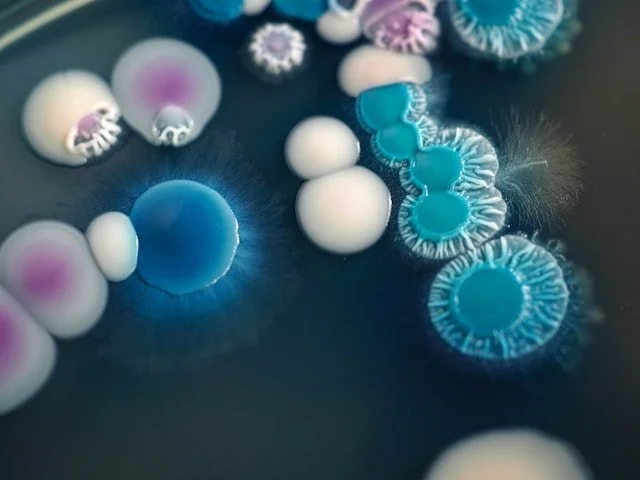
If you are doing dissections or looking at microscope slides, what do you see? Write down a detailed description of what it looks like to you. How do you differentiate it from its surroundings, or what landmarks did you use to find it?
How did specimens behave as you observed or worked with them? Can you use any of these behaviors to differentiate them from other specimens?
Taking these kinds of detailed notes that you can look back on later will really give added insight as you prepare for a lab exam.
Walk into the lab with a goal in mind.
Have a goal of your own that you wish to accomplish, above the required work, for each lab or tutorial block. Whether it is to ask a specific question or to improve a technique, walk in with a clear goal in mind. Perhaps you have a hard time locating the duodenum or finding a specific type of parasite on a slide. Go into the tutorial knowing what you want to focus on and then achieve that goal.
Listen to other people's questions and ask your own.
Asking questions is going to refine your knowledge. Is there something that you might not completely understand? Now is a great time to ask that question, as the answer can be both given and demonstrated. Also, listening to other people’s questions can not only give you another perspective on the material but is a great way to quiz yourself on what you already know.
Do you know the answer to that question? If it appeared on an exam, would you earn full marks? One of the smartest strategies is to pay close attention to questions discussed during class. Professors often rephrase these questions and include them on exams, especially when they have spent considerable time explaining the answers.
Do you have questions left unanswered from the last tutorial? Now is a great time to clear those up before you get too far away from the context.
Finish Assignments
Often, for science-based labs, after the procedure, there will be several questions posed about what you did or saw. Even though these may not be for marks, they should be completed after the lab block. These questions will focus on the intended takeaway from the lab and will usually appear in some form on the exam.
Maximizing the benefits of these extra class blocks while reducing the effort they require comes down to preparation and planning. One of the most effective strategies for labs is to arrive ready to learn. Don’t simply show up to your labs and tutorials; review the material beforehand and come prepared to participate.
Come prepared with questions, come prepared with homework complete, come prepared with goals! These blocks are not just designed to make your life miserable. They were implemented because history dictates that the students who came before you struggled with this material even if you don’t. These blocks were put into effect for your benefit, to help you excel in this class and the future classes that you will be taking within this faculty.
Unlock Your Potential with Our Study Skills Digital Course
Feeling overwhelmed by the demands of labs and tutorials? You’re not alone. Many students find themselves juggling multiple commitments, trying to grasp complex concepts while managing their time effectively. That’s where our Study Skills Digital Course comes in, a transformative resource designed to equip you with the essential strategies you need to succeed in your academic journey.

This course is perfect for students who want to refine their study techniques and boost their academic performance. Over the course of 5 information-packed modules, you’ll discover practical tips on mastering time management, effective note-taking, and active learning strategies tailored for science majors and beyond. With downloadable resources for each unit, you’ll have everything you need to implement these strategies in your own study routine.
Imagine walking into your next lab or tutorial not just prepared but confident. You’ll learn how to organize your study materials, set achievable goals, and actively engage with the content, making those lab sessions not just bearable but enjoyable. By the end of this course, you’ll not only be able to tackle the complexities of your studies but also develop a deeper understanding of the material that will set you up for future success.
Whether you’re looking to improve your grades, reduce stress, or simply gain a better handle on your coursework, this course is your gateway to academic excellence. Don't miss out on this opportunity to transform your study habits and take control of your education.
Join us today and unlock your full potential!
Navigating the demands of labs and tutorials can feel daunting, but the right strategies for labs can turn these challenges into valuable opportunities for growth. Remember, every lab session gives you the chance to deepen your understanding, strengthen your practical skills, and apply what you have learned in class. By approaching each session with purpose, you can set yourself up for greater success in your studies and future career.
To help you get started on this journey, we’ve created a free Study Guide Template and Activity Planner designed to streamline your study process. These tools will empower you to organize your notes, set clear goals, and make the most of your lab and tutorial experiences.

I want to be transparent so there are no misunderstandings. As an affiliate, I may earn a small commission from any products linked in this post. This is not a sponsored post, and I was not asked to recommend these products. These are products that I genuinely love and wanted to share with my audience.